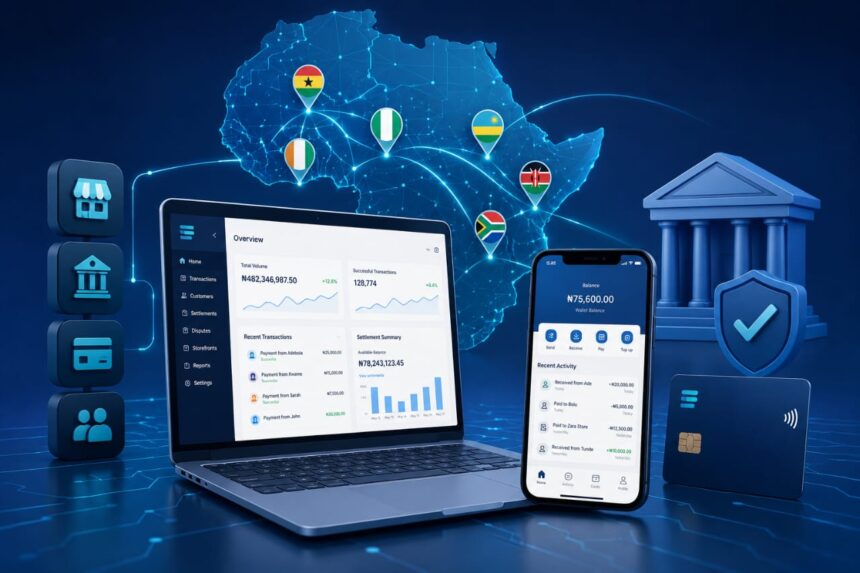
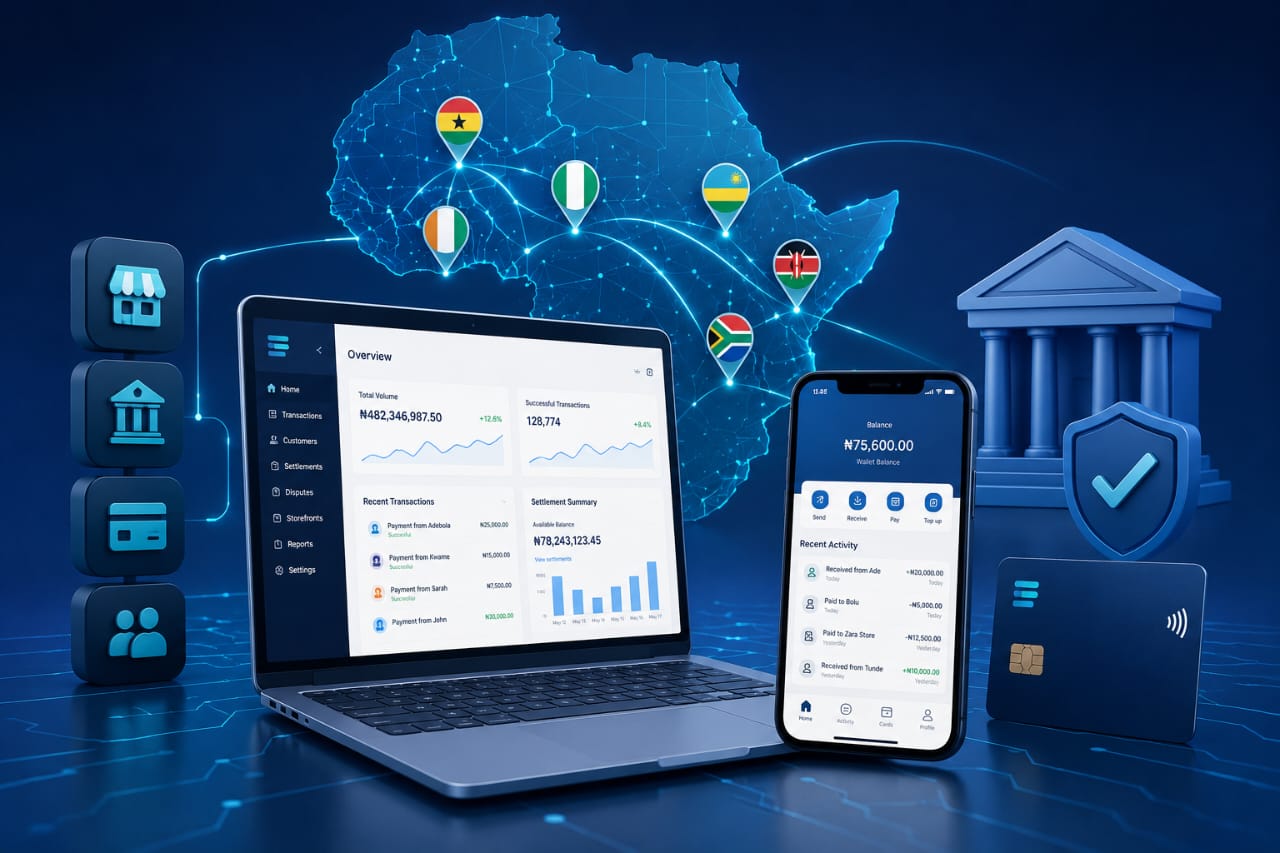
Paystack’s recent upgrade cycle marks a broader shift in how the company is presenting itself. A business that started as a payment gateway for African merchants is now building out payments, banking, developer tools, and consumer-facing products in parallel. The expansion is obvious enough, but the larger change is in scope: Paystack is no longer behaving like a single-product payments company.
The update is not cosmetic. It includes a new corporate structure, fresh APIs, a redesigned merchant dashboard, wider support for local payment rails, and deeper work on infrastructure and governance. Taken together, these changes point to a platform that is trying to serve merchants, developers, and end users from the same base.
The Paystack upgrade brought a new corporate structure
In early 2026, Paystack announced The Stack Group, a parent structure built to separate its expanding product set into clearer units.
The structure now includes Paystack for merchant payments, Zap for consumer products and transfers, Paystack Microfinance Bank for regulated banking services, and TSG Labs for work on AI and emerging infrastructure.
That kind of split usually says a lot. When a company starts dividing itself into distinct product lines, it is usually because the old setup no longer fits the scale of what it is trying to run.
Paystack says it now serves more than 300,000 businesses across Africa and has seen transaction volume rise sharply since the Stripe acquisition. Those numbers help explain the push for a more layered structure. What began as a payments business now has to support several different product paths without making the whole system harder to manage.
Dashboard redesign puts operations in the foreground
The dashboard update may not be the flashiest part of the rollout, but it is one of the most useful. For merchants, the biggest improvements often show up in places that do not look exciting at first glance: cleaner navigation, faster access to transaction history, easier refund handling, and better settlement visibility.
Paystack’s newer dashboard leans into that. It gives businesses more room to track transactions in real time, follow customer activity, review settlements, and handle disputes without digging through layers of menus.
That kind of layout matters for businesses that process a high volume of payments every day. A dashboard can be visually polished and still be awkward to use. The better test is whether it helps staff find problems before those problems spill into customer support or reconciliation work.
Paystack has also expanded access to richer metadata in some markets, especially South Africa, which gives businesses more context around bank validation and transaction handling.
Storefront and Order APIs push Paystack further into commerce infrastructure
Another important part of the Paystack upgrade is the addition of Storefront APIs and Order APIs through the developer platform, documented in the Paystack API changelog.
That move takes the company beyond payment collection and into the mechanics of selling. Developers can now build storefront flows, manage orders, track products and inventory, and connect checkout more tightly to the rest of the purchase process.
The practical payoff is simpler architecture. Instead of stitching together separate systems for storefronts, orders, and payments, businesses can keep more of that logic in one place.
For smaller merchants and fast-moving startups, that can shorten development time. For larger businesses, it can reduce the number of moving parts that need to stay in sync.
Zap gives Paystack a direct consumer layer
For years, Paystack stayed close to merchant infrastructure while other fintechs chased wallet products, transfers, and consumer engagement. Zap changes that.
Zap gives the company a consumer-facing product line focused on transfers, wallet-style features, and payment activity for individuals rather than businesses. That puts Paystack into a more crowded part of the market, where user experience, trust, and habit formation matter just as much as the payment rails underneath.
Consumer finance is a tougher environment than merchant payments. Onboarding has to be smoother. Fraud controls have to be tighter. Support demands rise quickly. Regulatory pressure gets heavier. Separating Zap under The Stack Group makes that load easier to isolate. It also makes the company’s direction harder to miss.
Local payment rails keep expanding
Paystack has also been pushing further into local transfer systems across Africa, with more emphasis on direct account payments rather than card-first checkout.
Recent additions include
- Pay with Bank Transfer in Ghana
- Pesalink support in Kenya
- Capitec Pay in South Africa
- expanded Dedicated Virtual Accounts
- more transfer approval tools
The logic here is straightforward. In many African markets, card usage is still uneven, while bank transfers and local payment rails are already part of everyday behavior. Supporting those flows can improve checkout completion and reduce dependence on international card networks.
It also gives businesses more flexibility when selling across markets with different payment habits.
WhatsApp commerce is now part of the picture
Paystack’s integration with Flowcart, formerly Sukhiba, brings payments into WhatsApp conversations for merchants in Nigeria, Kenya, and South Africa.
That is a practical move, not a flashy one. In a lot of African markets, a small business is more likely to close a sale in chat than on a polished website. Customers ask questions, compare options, send payment, and follow up all in the same thread.
WhatsApp has become a sales channel, a support line, and a checkout flow at once. Paystack is adapting to that reality instead of trying to replace it with a more formal online store model.
Infrastructure work stayed mostly out of view
Some of the most important changes in the rollout were buried under the surface. Paystack has described work on database migration to MySQL 8.0, using staged deployments and replication checks to reduce risk.
That may sound dry, but payment systems live or die on reliability. A bad migration can create duplicate entries, settlement errors, or transaction mismatches that are painful to untangle later.
Publicly discussing that work signals a company trying to keep pace with its own growth. Once transaction scale spreads across countries, infrastructure stops being background noise. It becomes part of the product.
AI governance is moving into the same conversation
Paystack also published a detailed outline of its AI governance framework, including oversight, human review, and internal controls.
That stands out because a lot of fintech companies are now adding AI into fraud detection, support, identity checks, and risk analysis without saying much about how those systems are supervised.
Financial platforms are being watched more closely than before, and for good reason. Once AI is involved in decisions that affect money, access, or compliance, the governance around it stops being optional detail.