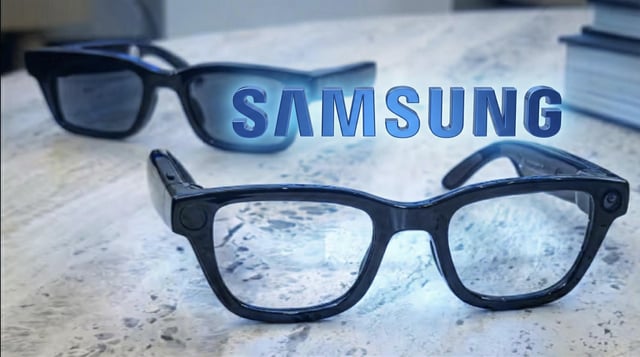
Google and Samsung used the opening day of Google I/O 2026 to reveal a new line of Android XR smart glasses, marking Google’s latest attempt to expand into wearable computing more than a decade after the launch of Google Glass.
The companies said the glasses are being developed in partnership with eyewear brands Warby Parker and Gentle Monster, a move that places fashion and appearance at the center of the product strategy. Samsung and Google presented the devices as lightweight eyewear designed for everyday use rather than experimental hardware.
According to details released during the event and in Samsung’s official announcement, the glasses are built on Android XR, Google’s operating system for extended reality devices, and integrate Google’s Gemini artificial intelligence assistant.
Samsung said the glasses are intended to work alongside smartphones and provide hands-free access to information through voice interaction. Features demonstrated during the presentation included navigation support, message summaries, calendar notifications, photo capture assistance and contextual recommendations delivered through Gemini.
The companies outlined two categories of smart glasses currently in development. One version focuses on audio-based interaction, while another includes a display system capable of placing information within the user’s field of view. Samsung said the audio-focused version is expected to launch later this year.
No pricing details, battery specifications or regional release plans were announced during the presentation.
The announcement places Google and Samsung in a growing market for AI-powered wearable devices that has drawn increased attention from major technology companies over the past two years. The renewed interest comes as firms attempt to integrate generative AI services into consumer hardware beyond smartphones and laptops.
Reuters reported that Google’s renewed push into smart glasses is expected to position the company more directly against Meta and Apple in the wearable technology market. The report also noted that commercial details surrounding the products remain limited at this stage.
Google previously entered the smart glasses market with Google Glass, which was first introduced in 2013. The product became widely associated with privacy concerns and social backlash, particularly over fears related to constant recording and the visibility of its built-in camera system. Google later shifted the product toward enterprise and industrial use cases before discontinuing the consumer version.
The approach presented at Google I/O 2026 reflects a different strategy from the company’s earlier rollout. By partnering with established eyewear companies, Google and Samsung appear to be placing greater emphasis on style, comfort and consumer acceptance.
Warby Parker and Gentle Monster are both known primarily for fashion eyewear rather than consumer electronics. Their involvement signals an effort to position smart glasses as standard accessories rather than highly visible technology products.
Coverage from The Verge noted that the companies framed the devices as tools meant to provide information without requiring users to constantly look at a phone screen. Demonstrations shown during Google I/O included spoken responses from Gemini and visual prompts designed to appear only when needed.
The Android XR platform itself was introduced as part of Google’s broader effort to create software for headsets and smart glasses capable of running AI-assisted applications. Google has said Android XR is designed to support multiple hardware partners and form factors.
During the presentation, Samsung did not provide a full product name for the glasses or confirm technical specifications such as processor details, camera capabilities or display resolution. The companies also did not confirm whether prescription lens options would be available at launch.
The reveal comes amid broader industry efforts to establish smart glasses as a practical consumer category. Several companies have recently focused on lightweight wearables capable of handling voice-based AI tasks while avoiding the bulk associated with earlier augmented reality headsets.
Google and Samsung’s presentation also highlighted how AI services are becoming increasingly integrated into wearable hardware. Gemini was presented as the primary interaction layer for the glasses, allowing users to ask questions, receive spoken responses and access contextual information without manually opening applications.
Samsung’s official newsroom statement described the devices as “intelligent eyewear” intended to support everyday tasks while keeping users connected to their surroundings. The companies did not announce a standalone app ecosystem or independent cellular connectivity during the event.
Google I/O 2026 featured several Android XR demonstrations alongside updates to Gemini and Android software. The smart glasses announcement was one of the most closely watched hardware reveals from the event due to Google’s history in the category and the increasing competition around AI-enabled consumer devices.
Additional details about launch timing, supported markets and final hardware specifications are expected closer to release.