
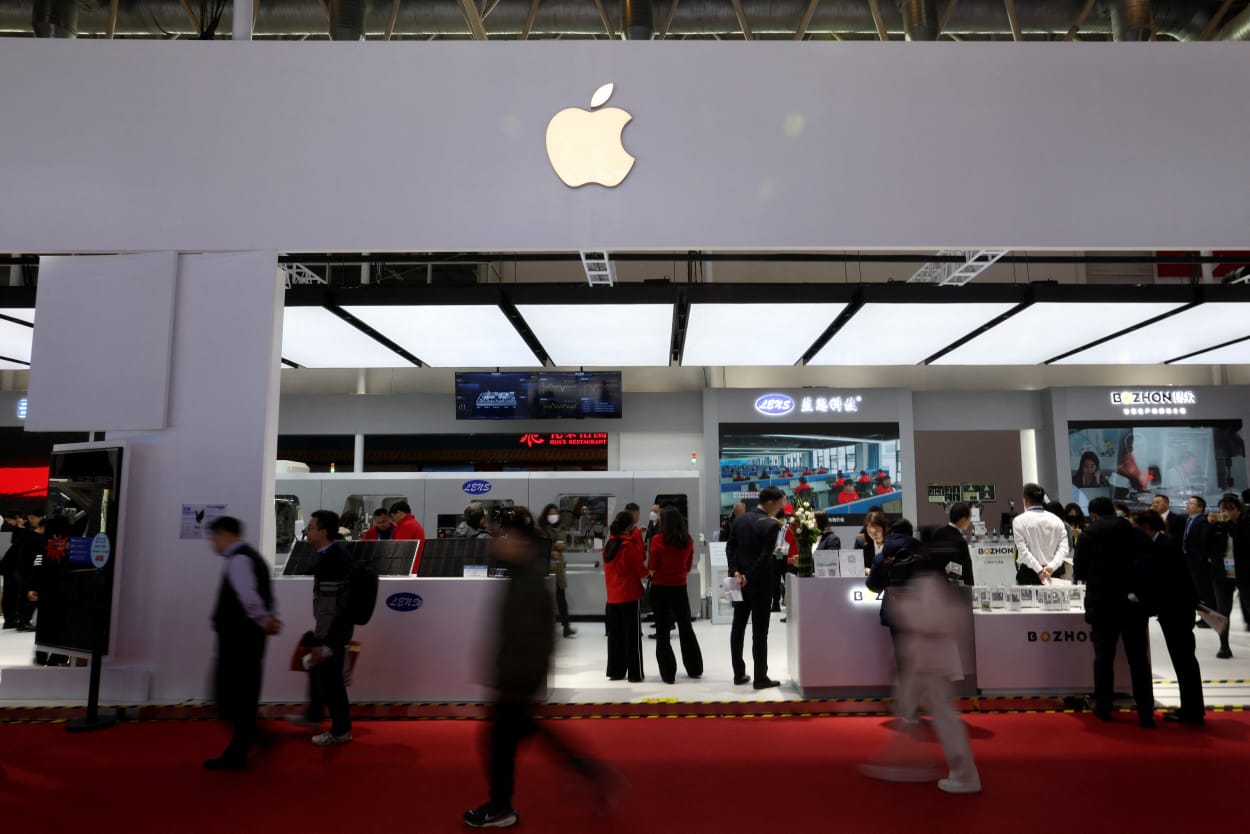
An Indian court has ordered Apple to cooperate with an ongoing antitrust investigation examining the company’s control over the iPhone app ecosystem, adding India to a growing list of jurisdictions scrutinizing the power of major technology platforms.
According to a Reuters report, the Delhi High Court rejected Apple’s attempt to halt the investigation being conducted by the Competition Commission of India (CCI). The court directed the company to fully cooperate with regulators while its broader legal challenge continues.
The case centers on allegations that Apple abused its position in the iOS app distribution market through policies tied to the App Store, in-app payment systems, and restrictions on how developers access iPhone users.
The court, however, temporarily restrained the CCI from issuing a final order until at least July 15, according to reporting from The Economic Times.
The investigation began after complaints filed in 2021 questioned whether Apple’s App Store rules unfairly limited competition. A separate Reuters report said the complaint was initially brought by a nonprofit group and later supported by companies including Match Group, along with several Indian startups.
Investigators working with the CCI reportedly concluded in earlier findings that Apple required developers to use its own in-app purchase system in ways that could be considered exploitative or anti-competitive.
Apple has denied wrongdoing throughout the proceedings. The company has argued that its market position in India is limited because devices powered by Google’s Android operating system dominate the country’s smartphone market.
Apple has also maintained that its App Store controls are necessary to protect user privacy and security. Similar arguments have been made by the company in disputes with regulators and developers in other regions, including the European Union and the United States.
A major issue in the case involves changes to India’s competition law framework. In 2024, India amended its competition rules to allow penalties to be calculated using a company’s global turnover rather than only its domestic revenue.
According to Reuters, Apple has challenged the legality of the revised framework, arguing that the penalty structure is excessive and potentially unconstitutional.
The company also warned in court filings that penalties calculated under the amended rules could theoretically reach tens of billions of dollars. Another Reuters report said Apple estimated potential exposure of up to $38 billion under the global-turnover formula.
Indian regulators have defended the revised penalty model, arguing that fines based only on local revenue may not serve as an effective deterrent for multinational technology companies with large global operations.
The case reflects broader changes in how regulators worldwide approach competition issues involving digital platforms. Authorities in multiple countries have increasingly focused on the control companies exercise over app distribution, payment systems, and integrated hardware-software ecosystems.
In recent years, regulators in the European Union, South Korea, Japan, the Netherlands, and the United States have examined similar concerns involving Apple’s App Store policies, including mandatory payment systems and restrictions on alternative marketplaces.
The European Union’s Digital Markets Act, for example, introduced new rules targeting large technology platforms identified as “gatekeepers.” The legislation seeks to limit practices that regulators believe can restrict competition in digital markets.
India has also become increasingly active in digital regulation beyond competition law. Policymakers have expanded oversight efforts involving digital payments, platform governance, and data-related rules as the country’s technology sector continues to grow.
The timing of the dispute is significant for Apple because India has become increasingly important to the company’s broader business strategy. Apple has expanded manufacturing operations in the country while also treating India as one of its fastest-growing consumer markets.
The investigation could ultimately result in financial penalties, changes to App Store policies, or other regulatory remedies if Indian authorities conclude that Apple violated competition rules.
The broader legal question underlying the case concerns whether tightly integrated digital ecosystems can create unfair barriers for developers and competitors.
Critics of Apple’s approach argue that the company’s control over hardware, software, app distribution, and payment systems gives it significant influence over how developers reach users on the iPhone platform. Apple maintains that the same level of integration is necessary to preserve security, privacy, and product quality.
The Delhi High Court’s order ensures that the investigation will continue while those arguments are tested in one of the world’s largest and fastest-growing digital markets.