
Non-deterministic agents have moved from research demos into production systems surprisingly fast. They now sit inside customer support platforms, coding environments, fraud analysis pipelines, enterprise search tools, and operational assistants that can plan, retrieve information, use tools, and revise their own decisions while running.
The term Non-Deterministic Agents refers to systems that may produce different outputs, plans, or behaviors even when given the same input. That variability is not limited to wording. Modern agents may choose different tools, retrieve different context, break tasks into different subtasks, or stop execution at different points. A small change early in the reasoning process can produce a completely different trajectory later.
For teams building production systems, this changes how reliability is approached. Traditional software engineering assumes stable behavior. Agentic systems do not always offer that guarantee. The challenge is no longer just model accuracy. It is operational control over probabilistic behavior.
Why Non-Deterministic Agents Behave Differently
A lot of confusion comes from the word itself. People hear “non-deterministic” and assume it simply means random outputs. That is only part of the picture.
With modern agents, the unpredictability usually shows up in the execution path. Give the same task to the same system five times and you may get five slightly different approaches. One run may search documentation first, another may inspect memory, another may jump straight into a tool call and only later realize it lacks context.
The important detail is that the system is making decisions while it runs.
That is very different from a conventional application following predefined logic. A workflow engine executing hardcoded business rules behaves predictably because every branch already exists ahead of time. An agent does not always have a fixed route. It constructs the route while moving through the task.
The ReAct paper is still one of the clearest demonstrations of this behavior. The model alternates between reasoning and action, generating intermediate thoughts before deciding which tool to use next. Once systems started adopting that pattern at scale, reliability problems became much more visible.
Where the Variability Actually Comes From
Some of it starts at the model layer. Language models generate probability distributions rather than fixed outputs. Sampling settings influence how aggressively the system explores alternatives. Even low-temperature inference can still produce small variations due to retrieval order, hardware-level operations, or context changes.
But the larger source of instability usually sits outside the model.
An agent rarely operates in isolation. It pulls data from search indexes, vector databases, APIs, ticket systems, browsers, internal tools, and memory stores. Every one of those systems can change between runs. A slightly different retrieval result can alter the reasoning chain enough to send execution down another path entirely.
This becomes obvious when watching long traces from production agents. Early decisions tend to compound. One incorrect assumption near the beginning often survives multiple reasoning cycles because later steps are built on top of it.
People sometimes compare this to human reasoning, and there is some truth there. Two experienced engineers investigating the same operational issue may take different routes toward the same answer. One checks logs first. Another checks infrastructure metrics. Neither process is perfectly linear.
What These Systems Look Like Once They Leave the Demo Stage
The public demos usually focus on the model itself. The production systems around them are much less glamorous.
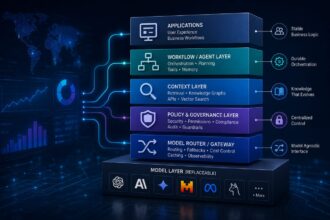
Most companies running agents seriously are wrapping them in fairly strict infrastructure. The reasoning remains flexible, but the surrounding environment becomes tightly controlled. There are execution limits, approval checkpoints, permission boundaries, retries, rollback systems, and extensive logging.
Tools like Temporal are increasingly common because they give teams durable workflow execution and replay capabilities. Frameworks such as LangGraph and Semantic Kernel are often used to structure state transitions so the system does not wander indefinitely.
Without those constraints, agents tend to behave badly over time. They loop. They overuse tools. They retry failing actions repeatedly. Sometimes they generate plausible-looking progress while accomplishing very little underneath.
That last problem shows up more often than many people expect.
Where Non-Deterministic Agents Are Already Useful
Software engineering is probably the cleanest fit so far because coding work naturally involves iteration. Development agents can inspect repositories, search documentation, run tests, modify files, and backtrack when assumptions fail. The workflow already resembles the way human developers operate.
Customer operations is another area where agents are quietly becoming useful, especially for internal workflows rather than public-facing autonomy. A support assistant may retrieve policy documents, summarize prior account activity, draft responses, and prepare escalation notes while still leaving final approval to a human operator.
Security teams have also started experimenting heavily with investigation agents. Analysts spend huge amounts of time correlating alerts across different systems. Agents are reasonably good at collecting context from logs, threat feeds, IAM records, and infrastructure telemetry.
Still, security environments expose a hard limitation very quickly: confident mistakes become operational liabilities. An agent that incorrectly dismisses malicious activity is far more dangerous than one that simply fails quietly.
That tends to change how aggressively organizations allow these systems to act on their own.
The Failure Patterns That Keep Appearing
One recurring mistake is giving agents too many loosely defined tools. Once the toolset grows, selection quality drops noticeably unless descriptions, schemas, and permissions are carefully constrained.
Another issue is memory pollution. Long-term memory sounds attractive until the retrieval layer starts surfacing stale, irrelevant, or conflicting context. Teams building persistent agents often discover that memory pruning becomes necessary much earlier than expected.
Traditional software tests assume stable outputs. Agent systems do not behave that way consistently enough for ordinary assertions to work well. Many teams now run repeated trajectory evaluations instead of checking single outputs. They inspect whether the agent reached a useful conclusion, how many steps it used, which tools it selected, and whether recovery behavior remained stable after failures.
A single successful run tells you almost nothing about reliability.
Cost variability creates another operational headache. One task may complete in four tool calls. Another may spiral into dozens of retrievals, retries, and reasoning loops. Without execution caps, token usage becomes unpredictable surprisingly fast.
What Needs Attention Before Deployment
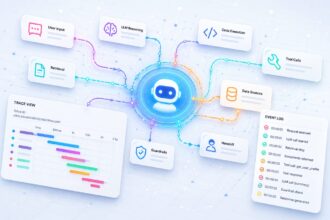
The most useful thing a team can do early is improve visibility. If engineers cannot inspect intermediate reasoning steps, tool traces, retrieved context, and execution history, debugging becomes extremely frustrating.
Replayability helps too. Systems should preserve enough execution state to reconstruct what happened after a failure. That requirement is pushing many organizations toward deterministic orchestration layers wrapped around probabilistic reasoning engines.
Governance is becoming more formal as well. The NIST AI Risk Management Framework is increasingly referenced in enterprise environments because it gives organizations a structured way to think about oversight, monitoring, and operational risk.
Most experienced teams eventually arrive at the same conclusion that agents need boundaries.
Not because the systems are useless without them, but because unrestricted autonomy becomes difficult to operate responsibly once real infrastructure, customer data, and production systems are involved.