
If you spend enough time testing real systems, you start to notice a pattern. The issues that look dramatic in reports are not always the ones that cause the most damage. Injection gets attention because it is visible and easy to demonstrate. Authentication bugs tend to be quieter, and they are the ones that keep showing up in incident reports.
Authentication bugs are more dangerous than injections in a very practical sense. When you exploit an injection, you are usually fighting the system. When you exploit authentication, the system cooperates. It treats you like a legitimate user, and everything downstream follows that assumption.
I have seen cases where a simple session handling mistake gave more access than a working SQL injection ever could. No payload tuning, no weird encoding tricks, no WAF bypass. Just a valid session in the wrong hands.
Why Authentication Bugs Don’t Look Like Bugs
Most of the time, they do not look like “hacks.” They look like normal flows that behave slightly wrong.
A password reset link that does not expire when it should. A session cookie that stays valid after logout. A token that is checked in one service but blindly trusted in another. These are the kind of things you find after poking around for a while, not after firing automated scanners.
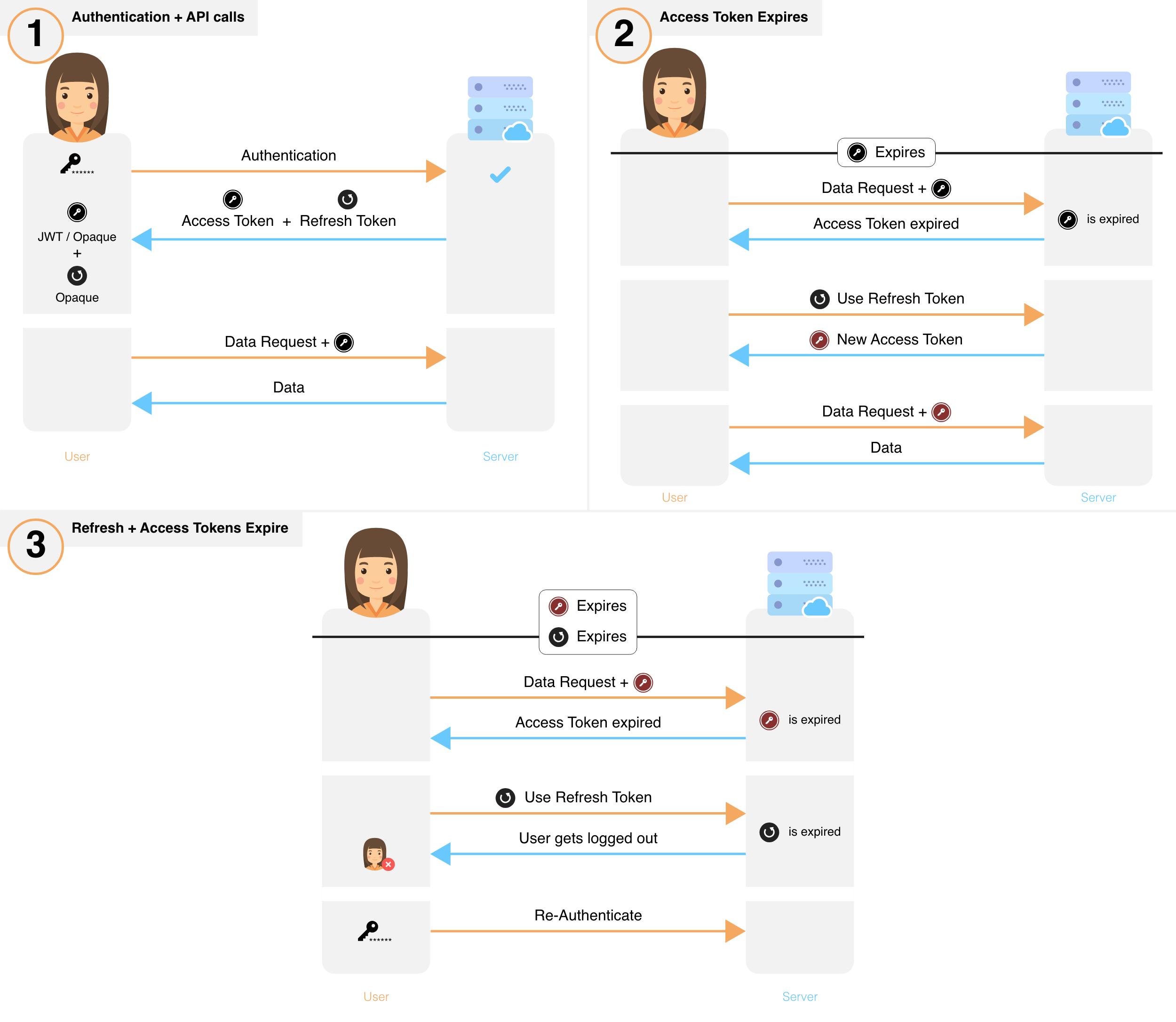
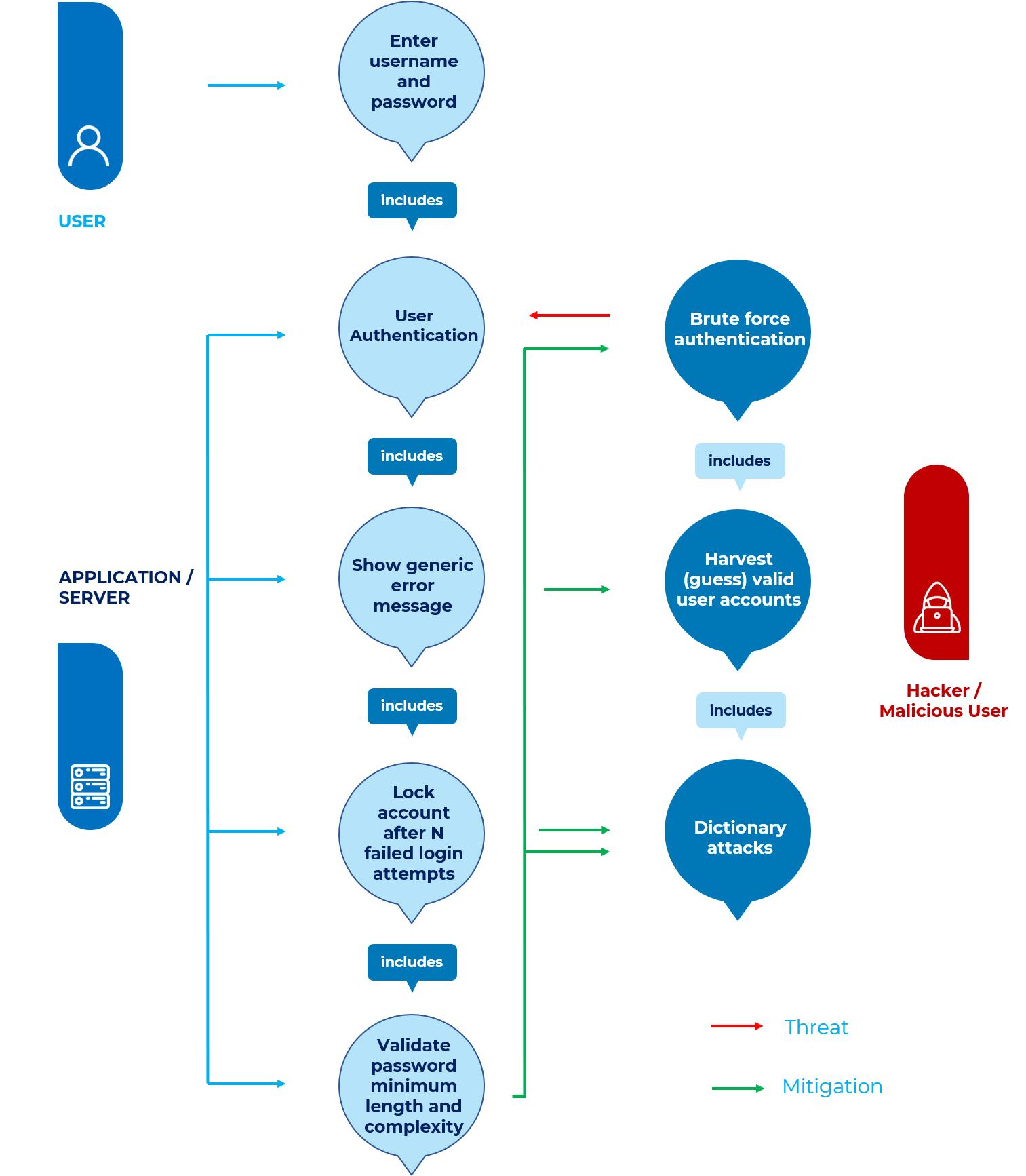
The OWASP Authentication Cheat Sheet covers a lot of this, but the gap is usually not knowledge. It is implementation drift. The login flow gets updated. The mobile client handles tokens differently.
A new microservice trusts whatever the gateway forwards. Over time, the rules stop being consistent. That inconsistency is where things break.
Injection Breaks Logic. Authentication Breaks Identity.
Injection is still serious. If you get a clean SQL injection, you can pull data, sometimes escalate further, maybe even get code execution depending on the stack. The OWASP injection category is not going anywhere.
But injection usually starts as a localized problem. You are exploiting a query, a parser, or a command boundary. You still need to move from that foothold to something broader.
Authentication bugs skip that step. If you can log in as another user, especially a privileged one, you are already operating inside the system’s trust model. You do not need to “break in” further. You just use the system the way it was designed to be used.
That difference changes how much effort an attacker needs to put in. It also changes how visible they are while doing it.
Where Things Usually Go Wrong
JWT handling is one of the most common trouble spots. Teams adopt token-based auth because it scales well, then cut corners on validation. They verify the signature but ignore the audience. Or they trust tokens from multiple issuers without checking which one they actually expected. RFC 7519 is clear about what should be validated, but in real codebases those checks are often partial.
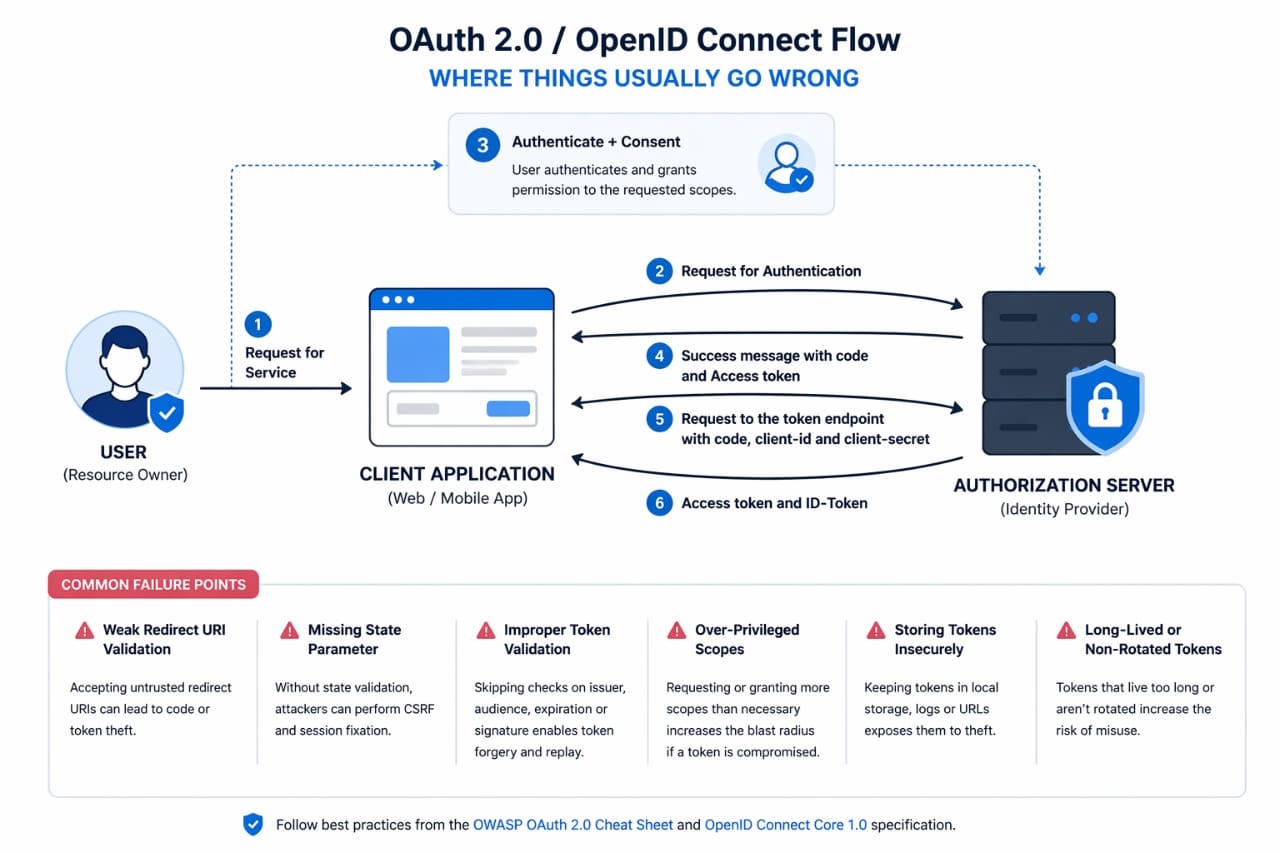
OAuth and OpenID Connect introduce a different kind of failure. The protocols themselves are solid, but implementations get creative. I have seen systems accept tokens from the wrong client, skip state validation entirely, or treat an access token as proof of identity. The OpenID Connect spec is not ambiguous about this, but teams still simplify flows to make them “work.”
Session management is the older problem that never really went away. Long-lived sessions, predictable identifiers, weak invalidation. The OWASP session guidance reads like a checklist of things people keep skipping because they are inconvenient.
Microservices make all of this worse. One service validates properly. Another assumes the request has already been checked. That assumption becomes an attack path.
Why Authentication Bugs are More Dangerous During an Actual Incident
Detection is where the gap becomes obvious.
Injection attempts often leave artifacts. Strange inputs, broken queries, error messages, logs that do not look like normal user activity. Even if they are not blocked, they tend to stand out.
Authentication bugs do not behave like that. A valid session looks like a valid session. A forged token that passes verification looks like a normal request. Logging systems record it as a legitimate user action because, from the system’s point of view, it is.
This is why attackers can sit inside systems for longer when identity is compromised. There is less friction and fewer obvious signals.
And once they are in, they do not need to do anything clever. They can just use the application.
What to Check Before You Trust Your Auth Layer
Start with token validation and be strict about it. If you are using JWTs, validate the signature, issuer, audience, and expiration every time. Not in some services. Not only at the edge. Everywhere the token is consumed.
Then look at session lifecycle. Sessions should rotate after login, expire after inactivity, and die on logout. If you can reuse a session after logout, you have a problem. If sessions live for days without a strong reason, you probably have a problem.
Password reset flows deserve their own review. Short-lived tokens, single use, no leakage through URLs or logs. This is one of the easiest ways into an account if it is implemented poorly.
Finally, separate authentication from authorization. Being logged in should not automatically grant access to everything tied to that identity. The NIST digital identity guidelines treat identity assurance and access decisions as distinct concerns for a reason.
Tradeoffs You Cannot Ignore
There is no perfect setup. Short sessions annoy users. Strict validation adds overhead. Multi-factor authentication introduces support issues when people lose devices or switch phones.
But loosening these controls usually shows up later as a security issue. Most teams do not remove validation checks because they think it is safe. They remove them because something broke and this was the quickest way to get things working again.