Kubernetes admission controller security has become a critical layer in modern cluster defense. Admission webhooks now influence pod creation, workload mutation, policy enforcement, and API validation across production environments.
That level of access creates a high-value attack surface capable of privilege escalation, cluster-wide denial of service, and unauthorized cross-namespace access when left loosely configured.
Security incidents tied to admission infrastructure have exposed a recurring pattern: organizations harden workloads but overlook the controllers sitting directly inside the Kubernetes API request path. That gap is expensive.
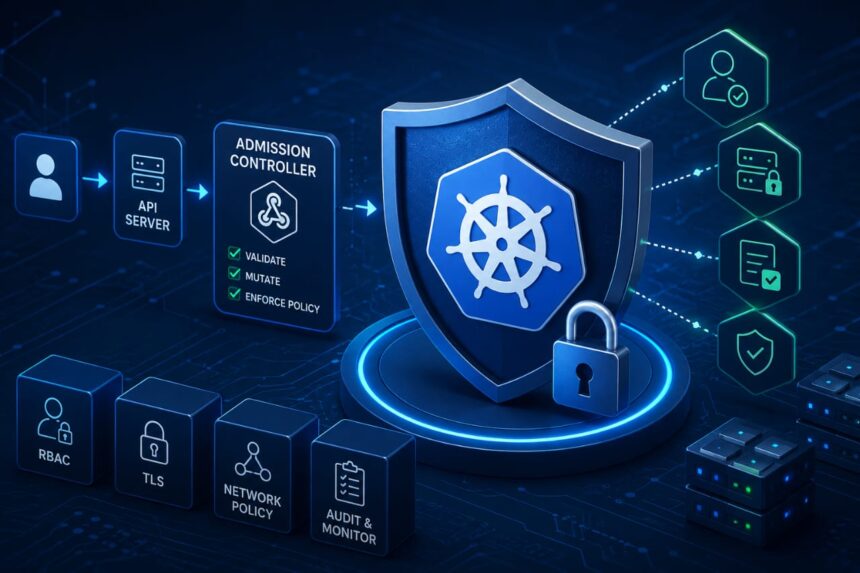
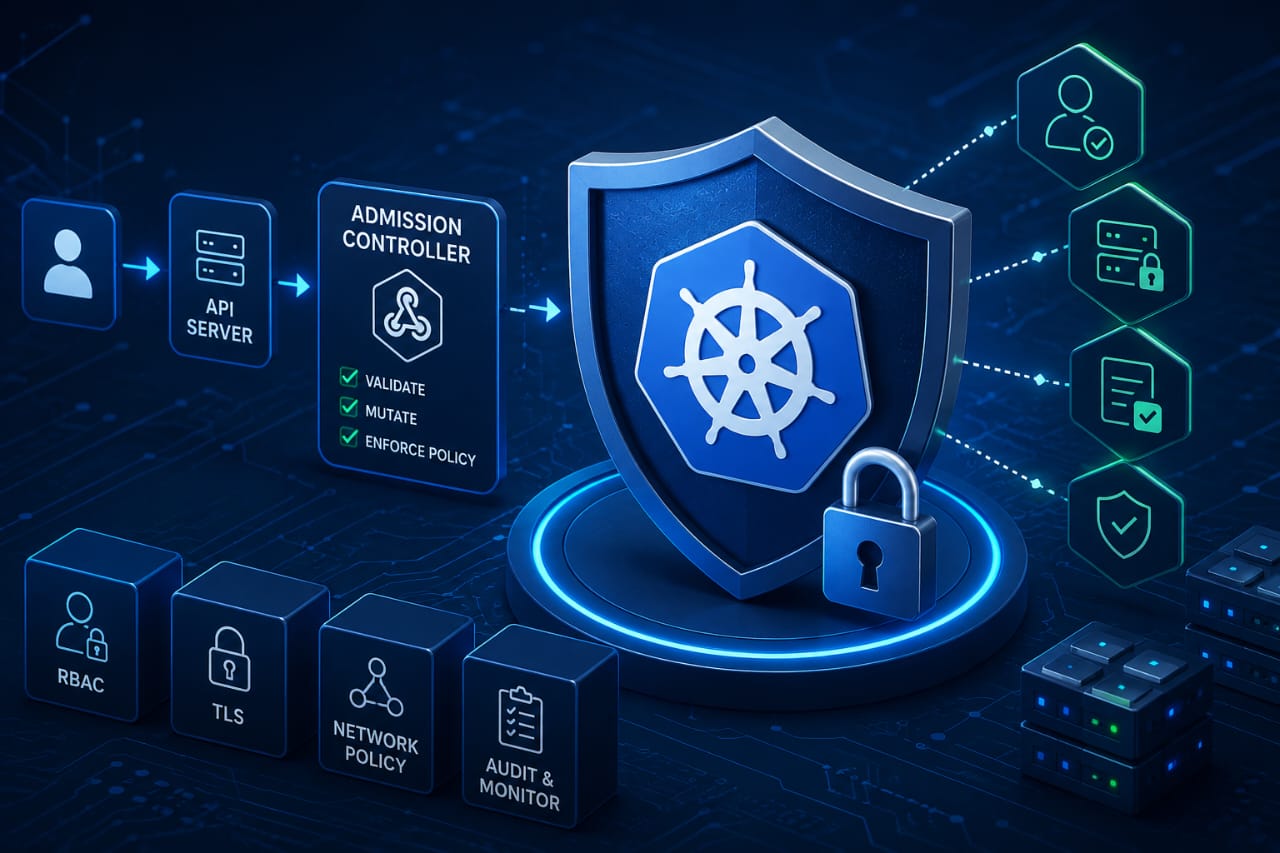
Admission controllers operate between authentication and object persistence. Every request to create, modify, or delete Kubernetes resources can pass through them. A compromised webhook can rewrite workloads, inject malicious configuration, bypass namespace boundaries, or block the API server entirely.
Kubernetes admission controllers were originally designed to enforce policy consistency. Over time, they evolved into infrastructure capable of mutating workloads, injecting sidecars, validating custom resources, and controlling deployment behavior across entire clusters.
How Kubernetes Admission Controller Security Breaks Down
Most admission controller abuse starts with excessive privilege.
Many webhook deployments still run with broad ClusterRole permissions, wildcard API access, and unrestricted secret visibility. Once an attacker gains influence over the webhook logic, the admission controller’s service account effectively becomes a pivot point into the cluster.
That influence can come from several places:
- Unsafe policy templating
- Improper object parsing
- Cross-namespace resource resolution
- Webhook remote code execution
- Weak TLS validation
- Unrestricted mutation logic
A 2025 academic study on Kubernetes operators found widespread namespace isolation failures caused by privileged controllers resolving references across namespaces. The same architectural weakness appears frequently in admission webhook implementations. The research showed how namespace-scoped users could indirectly access resources beyond their intended boundary through controller behavior.
The study highlighted a larger issue inside Kubernetes ecosystems: controllers frequently become unintended trust bridges. That distinction changes how admission infrastructure should be secured.
Mutating Admission Webhooks Introduce Additional Risk
Validating webhooks reject requests. Mutating webhooks rewrite them.
A mutating controller can inject containers, alter security contexts, modify environment variables, add credentials, rewrite network configuration, and fhange storage definitions
Once mutation becomes dynamic, policy visibility decreases. Cluster administrators reviewing deployment manifests may no longer see the final runtime configuration being applied inside the API server. Security reviews often miss this.
The official Kubernetes security guidance recommends minimizing webhook complexity and limiting exposure because admission webhooks operate inline with API traffic. Even small latency spikes or configuration failures can degrade cluster availability.
Several high-profile ingress controller vulnerabilities demonstrated how admission webhooks could become remote code execution entry points. Once compromised, attackers gained the ability to access secrets, manipulate workloads, and expand privileges across namespaces.
Reducing the Kubernetes Admission Controller Attack Surface
The strongest admission controller hardening strategy starts with reducing how much logic exists inside the webhook layer.
Built-in Kubernetes enforcement mechanisms should handle baseline policy whenever possible.
For example, Pod Security Admission already enforces controls around privileged containers, host namespaces, unsafe Linux capabilities, hostPath mounts, and privilege escalation
Using native controls reduces the amount of custom webhook logic exposed to untrusted input. That simplification improves security posture immediately.
Admission webhooks should only handle policies that cannot be implemented through built-in Kubernetes capabilities.
How to Harden Admission Controller RBAC
RBAC design remains one of the most overlooked parts of Kubernetes admission controller security.
Many deployments continue operating with cluster-admin privileges even when the webhook only validates specific namespaces or resource types.
A hardened webhook should follow several strict boundaries:
- Avoid wildcard resources and verbs
- Restrict access to only required API groups
- Deny secret access unless absolutely necessary
- Separate validation and mutation responsibilities
- Use namespace-scoped permissions whenever possible
Admission controllers should also avoid inheriting permissions indirectly through aggregated roles.
Those inherited permissions frequently expand over time without review.
One effective approach is creating dedicated service accounts for separate webhook functions instead of running every controller component under a shared identity. This limits lateral movement after compromise.
Network Isolation Is Often Missing
Admission webhooks should never be reachable from outside the cluster.
Yet exposed webhook services continue appearing in production environments, especially through misconfigured ingress routing or cloud load balancer exposure.
Webhook traffic should only be accessible from the Kubernetes API server.
Controllers should also run on hardened nodes where possible, separated from untrusted workloads.
Isolation reduces the chance of workload-to-controller compromise.
TLS Configuration Failures Create Silent Exposure
Admission controllers depend heavily on TLS trust relationships with the Kubernetes API server.
Weak certificate validation creates opportunities for interception and spoofed webhook responses.
Production deployments should:
- Rotate webhook certificates automatically
- Validate API server identity properly
- Avoid insecure certificate skipping
- Monitor certificate expiration aggressively
Expired webhook certificates have caused production outages across Kubernetes environments because the API server could no longer validate admission responses.
These failures often appear suddenly during deployments or scaling operations.
Short webhook timeout values also help reduce cascading API failures during webhook instability.
Admission Controller Scope Should Stay Narrow
Broad webhook matching rules increase risk substantially.
Some configurations still intercept every operation across all resources:
resources: ["*"]
operations: ["*"]
That design expands:
- Attack surface
- Latency
- Failure impact
- Operational complexity
Instead, admission controllers should narrowly target only the resources they actually need to evaluate.
Namespace selectors and object selectors provide additional filtering that significantly reduces unnecessary processing.
System namespaces should also remain excluded unless explicitly required.
Observability Is Essential for Kubernetes Admission Controller Security
Many organizations monitor workloads extensively while leaving admission infrastructure almost invisible.
That creates dangerous blind spots.
Security monitoring should track:
- Webhook configuration changes
- RBAC modifications
- Certificate rotations
- Webhook latency spikes
- API rejection anomalies
- Unexpected mutation patterns
- Admission failures across namespaces
Critical Kubernetes objects like MutatingWebhookConfiguration and ValidatingWebhookConfiguration deserve continuous audit visibility.
Unauthorized changes to these resources can silently alter cluster-wide enforcement behavior.
That level of control deserves the same scrutiny as identity infrastructure.
Policy Engines Need Runtime Hardening Too
Platforms such as Kyverno and OPA Gatekeeper provide powerful policy enforcement capabilities, but they should still operate under hardened runtime conditions.
Controllers processing untrusted Kubernetes objects should never have unrestricted runtime privileges.
Even well-audited policy engines remain software exposed to hostile input.
Kubernetes admission controller security is no longer a niche operational concern. Admission infrastructure now sits directly in the enforcement path for workload creation, policy validation, and deployment governance across modern clusters.
That position makes it one of the most sensitive layers in the Kubernetes control plane.
Organizations that reduce webhook complexity, minimize privilege, isolate network access, and continuously audit admission behavior significantly reduce the likelihood of cluster-wide compromise originating from the policy layer itself.