
Search blending is changing how people meet brands online. A search result page used to work like a directory: a user typed a query, scanned links, and chose where to go next.
Now Google’s AI Overviews and Microsoft’s Copilot search experiences can surface a direct answer first, with ads and source links folded into the same screen. That means the first job of search is no longer just to send people somewhere else. It is to hold attention long enough to shape the decision.
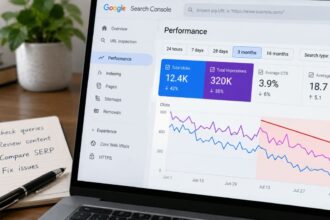
This is already visible inside Google’s own tools. Google says ads can appear in and around AI Overviews, and it expanded those ads further in 2025. It also launched separate Search Generative AI performance reports in Search Console in June 2026, so site owners can see impressions from AI Overviews, AI Mode, and related generative surfaces. That is a small clue with a large meaning: Google now treats AI visibility as something worth measuring on its own.
Search Blending is Not Just a Layout Change
The easy mistake is to treat search blending like a redesign. It is bigger than that. When an AI answer appears before the click, the search engine becomes part publisher, part editor, and part marketplace. The user is still searching, but the experience is less like browsing a list of links and more like reading a guided response with commercial options attached. Google’s own guidance says its generative AI features are rooted in core ranking and quality systems, and that SEO remains relevant for those experiences.
That matters for both paid and organic search. Paid search is no longer competing only with other ads. It is competing with the answer itself. Organic search is no longer competing only with rival pages. It is competing with the search engine’s summary of the web. The old split still exists, but the user sees it through a new layer.
What AI Search is Doing to Clicks
There is now solid evidence that AI summaries can reduce outbound clicks. A Pew Research Center analysis published in July 2025 found that Google users who encountered an AI summary clicked a traditional search result in 8% of visits, compared with 15% when no AI summary appeared. That does not mean every site will lose traffic in the same way. It does mean the click is becoming a weaker signal of exposure.
That detail should change how marketers think. A page can influence a purchase, a sign-up, or a brand choice without receiving the final visit. A user may read the summary, trust the cited source, and return later through a direct search or a bookmark. In that world, traffic is still useful, but it is no longer the whole picture. Search blending pushes more value into the stage before the click.
Some studies have shown much sharper drops for certain query types, especially informational searches with AI Overviews. Search Engine Land reported Seer Interactive findings showing large CTR declines for both organic and paid results on those queries. The exact numbers will keep moving as the product changes, but the direction is clear enough: when an AI answer satisfies the question early, fewer people continue down the old path to the website.
What this Means for Paid Search
Paid search is not disappearing. It is being absorbed into a more crowded experience. Google says ads can show in AI Overviews when its systems determine that generative AI is useful for the query, and Microsoft says AI Max can deliver relevant ads on Copilot Search and Copilot Answers. That means ad planning now has to account for an environment where the sponsored result may appear after the AI has already done some of the persuasion.
That changes creative strategy. An ad that worked well in a plain search results page may feel thin when placed beside a detailed AI answer. Clear offers still matter. Strong landing pages still matter. Good conversion tracking still matters. But the ad itself now has to earn attention in a page where the user may already have a decent answer. That is a tougher job than bidding into a keyword auction and hoping for a click.
The practical lesson is simple: paid search should not be written only for intent. It should also be written for context. Search blending rewards ads that feel like the natural next step after an answer, not a noisy interruption. Google’s own 2025 ad guidance uses that language for AI Overviews, and Microsoft’s 2026 posts make the same case for Copilot surfaces.
What this Means for Organic Search
Organic search is still the place where authority is built, but the shape of that authority is changing. Google’s helpful content guidance says its ranking systems are designed to reward helpful, reliable information created for people. Its AI search guidance also says the same SEO fundamentals still apply in generative AI features. In plain English, that means copied summaries and generic filler are weak bets. Original detail is stronger.
This is where many articles on the topic get too vague. The advice should not stop at “publish quality content.” That phrase is true, but too soft to act on. The better question is: what kind of page is easy for both a person and an AI system to trust? Pages with firsthand examples, specific numbers, clear explanations, and visible expertise tend to travel better through AI search than pages that simply restate what everyone else has already said. Google’s guidance on AI features and helpful content points in that direction. Google’s helpful content guidance is a good place to start.
There is also a measurement lesson here. With Google now offering separate reporting for generative AI visibility in Search Console, publishers can stop guessing about some of this exposure. Look at those reports alongside branded search demand, direct visits, assisted conversions, and email or lead growth. A page that is not getting clicks may still be doing useful work upstream.
How to Publish for Search Blending
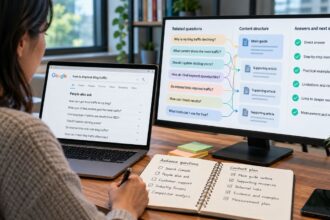
Start with one clear question and answer it completely. Not with fluff. With the shortest honest answer first, then the evidence behind it. That structure helps readers move quickly, and it gives AI systems cleaner material to work with. Google’s Search Essentials and AI feature guidance both lean toward pages that are useful, well-structured, and easy to understand. Google’s AI features guidance makes that point plainly.
Next, add something only your page can say. That could be a test you ran, a short observation from client work, a comparison table, a screenshot, a product example, or a local angle. AI search can summarize the web, but it has a harder time replacing fresh, specific material. A page that contributes something new is easier to cite and harder to ignore.
Finally, build for recognition outside your own site. Search blending rewards brands that people have already seen in multiple places. A mention in a respected publication, a strong author bio, a visible business profile, and consistent coverage of one topic all help a page feel more established. That does not guarantee an AI citation. It does improve the odds that your content will look like a safe source rather than just another page in the pile. 15
Conclusion
AI influence on paid vs organic search blending is not a small UI shift. It is a change in how search distributes attention. Google and Microsoft are both moving toward answer-first experiences, ads are being woven into those experiences, and publishers are being asked to earn visibility in a space where the click is less certain than it used to be.
The useful response is not panic. It is better content, clearer measurement, and a wider view of what visibility can look like. Search blending rewards pages that are useful on their own, easy to trust, and strong enough to be cited even when the visit does not happen right away. That is a harder game. It is also a more honest one.